
Trustpassing
DOI:
https://doi.org/10.12794/journals.ujds.v4i1.378Abstract
Trustpassing is a series of four zines that share collective stories from Hamilton, Ontario, Canada, about how digital vulnerabilities intersect with material forms of security and safety, including but not limited to emergency housing, sex workers’ rights, job security, policing and law enforcement, and access to safe spaces. The zines stem from a community-centred project in partnership with Jelena Vermillion, Executive Director of the Sex Workers’ Action Program (SWAP), Hamilton. Employing a zine as participatory action research methodology (French and Curd 2021; Kindon et al. 2007), the project documented and mobilized expertise drawn from lived experience, positioning participants as knowledge holders (Cornish et al. 2023; Lovata, 2008) whose insights challenge dominant assumptions about what digital safety looks like and who is considered at risk.
Mainstream digital security frameworks treat end users generically. We all face common vulnerabilities. By practising good ‘cyber hygiene’, we strengthen our first line of defence and protect ourselves. In this approach, cyber risks and threats are often seen as individual choices, shifting responsibility onto end users (Basu & Biddolph 2025) This project steps back from treating digital security as a universal resource that benefits everyone equally, aiming to examine the digital insecurities and threats that are often overlooked by mainstream frameworks (Bengtsson Meuller, 2023; Chen et al. 2022; Cristiano et al. 2023; Gajjala et al. 2026).
How do digital security frameworks identify end users who already face social stigma? What are the varied impacts of digital safety and security? How are digital (in)securities connected to the experience of material security and access to basic necessities? How do people who rely on social services, lack stable housing, and engage in street-based sex work come to be disproportionately subjected to invasive and unwarranted surveillance that is routinely justified as ‘protection’ or ‘security’? More broadly, this project asks whether reorganizing our understanding of digital security to include the social dimensions of insecurities and vulnerabilities alongside the technical ones can help shift where accountability is placed.
From January to May 2025, we hosted 11 workshops on Thursday evenings at the YWCA in downtown Hamilton, drawing roughly 220 participants. The first 7 sessions focused on creative practices such as collaging and blackout poetry, each guided by a set of prompts. The final 4 workshops shifted to reviewing rough zine drafts and gathering participant feedback to inform the final design. Across the 7 content generation workshops, the prompts moved from broad questions about safety and security to more specific reflections on participants’ experiences in digital environments. Rather than impose fixed definitions of digital safety, security, or harm, we intentionally kept these concepts open. Our goal was to understand how participants themselves experience, articulate, and interpret these concepts. Although we developed a plan for each workshop, we approached the workshops iteratively. We prioritized keeping our data generation methods responsive to participants’ needs and engagement (Benjamin-Thomas et al. 2018). As a result, we returned to collaging multiple times because it proved to be the most accessible, comfortable, and generative method for our participant community.
Across the four-volume series, the zines bring together safety and security strategies, calls to action, shared experiences, anecdotes, and striking visuals, some of which were remixed during the design process. Because all content was generated directly through the workshops, the material reflects participants’ own language, insights, and priorities. While the volumes are interconnected, each can also be read on its own, a structure that supports ease of reproducibility. Together, the volumes capture distinct ways that safety and security manifest in participants’ lives, with each subtitle drawn from statements and observations shared by participants.
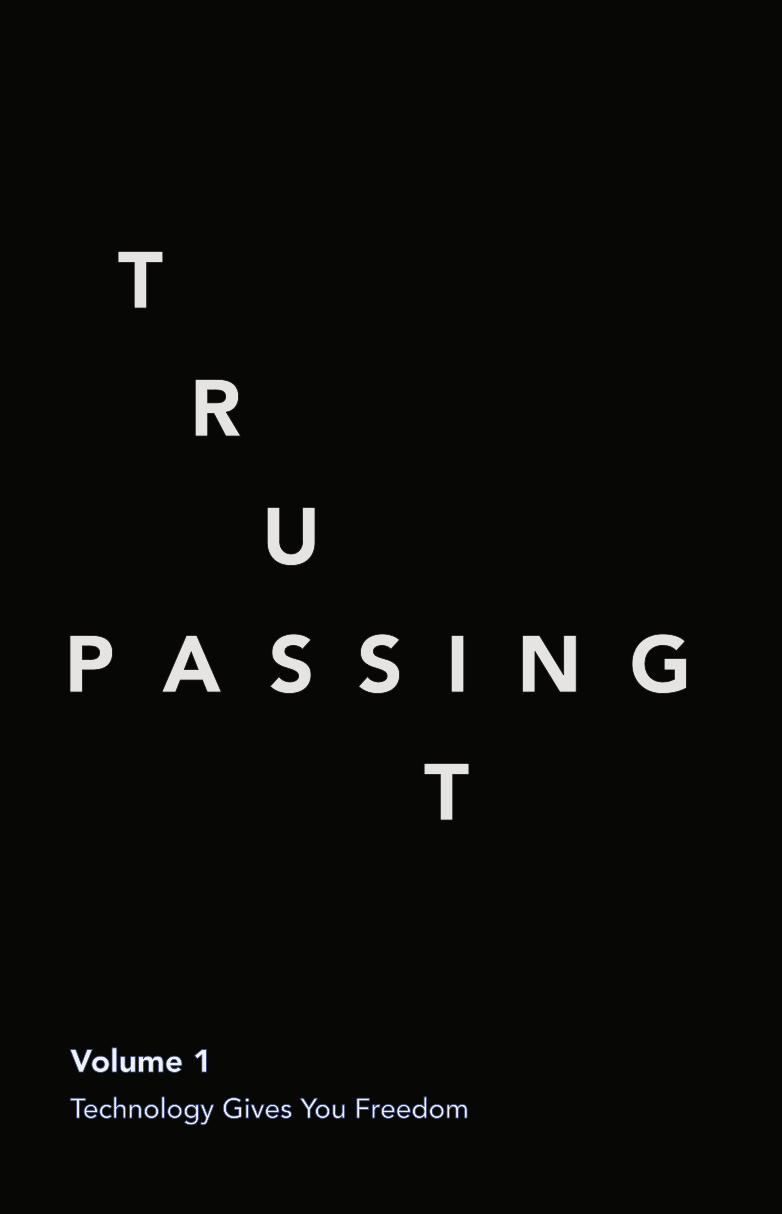
Volume 1, Technology Gives You Freedom, moves from the emancipatory potential of technology to the vulnerabilities and harms participants encounter online and offline, establishing the relationship between material and digital forms of security and safety. Volume 2, Insecurity Is Good Business, examines how insecurity is built into technological infrastructures, from social media platforms to law enforcement systems, and how people are secured in uneven and inequitable ways. Volume 3, We All Feel Secure Until We Are Not, builds on this analysis by exploring the business model of insecurity that underpins the internet, while also highlighting the ‘differential vulnerabilities’ (Pierce et al. 2018) participants face, including reflections on the City of Hamilton ransomware attack (Beattie 2024) and the prioritization of technological development over core forms of social security such as housing, income, food access, mental health supports, and childcare. Volume 4, Digital Safety Doesn’t Mean You’re Safe, turns toward mitigation strategies used by street-based sex workers and expands into broader questions about what constitutes safety and security, emphasizing that these concepts are not universal. It surfaces key insights into potential forms of (digital) safety that could make street-based work safer, offering an open-ended proposition about what becomes prioritized and what is overlooked when we talk about safety and security.
The zine format was indispensable to the project. First and foremost, we needed a form that could cohere individual experiences into a collective narrative while accommodating multiple modes of expression, including visual and textual content. We also needed a form that could be disseminated quickly, easily reproduced and shared, and that could carry community knowledge outward (Baker and Cantillon 2022; Lovata 2018). The zine form offered all of this while also challenging traditional academic conventions about who produces knowledge and whose expertise counts (Vong 2016). We wanted the immediate public output to be something participants could recognize themselves in, take ownership of, and be proud of. A core aim of Trustpassing is to function for its readers as “engines of critical engagement, self-questioning, and renewal” (Joseph and Sawyer 2023, 13) by foregrounding participant knowledge and expertise, inviting critical reflection, and opening space for alternative ways of understanding digital safety, security, and power.
References
Baker, Sarah., and Cantillon, Zelmarie. 2022. “Zines as community archive.” Archival Science 22, 539–561. https://doi.org/10.1007/s10502-022-09388-1.
Basu, Sulagna., and Biddolph, Caitlin. 2025. “Queering Cybersecurity: An Alternative Research Agenda.” Critical Studies on Security, May, 1–25. doi:10.1080/21624887.2025.2502716
Beattie, Samantha. “Hamilton Hit by Ransomware Attack, City Says for 1st Time since Incident Paralyzes Services.” CBC News, March 4, 2024.
https://www.cbc.ca/news/canada/hamilton/ransomware-attack-1.7133457.
Bengtsson Meuller, Elsa. 2023. A Feminist Theorisation of Cybersecurity to Identify and Tackle Online Extremism. Global Network on Extremism and Technology.
https://doi.org/10.18742/pub01-132
Benjamin-Thomas, Tanya Elizabeth., Corrado, Ann Marie, McGrath, Colleen, Rudman, Debbie Laliberte, & Hand, Carri. 2018. “Working Towards the Promise of Participatory Action Research: Learning From Ageing Research Exemplars.” International Journal of Qualitative
Methods, 17(1). https://doi.org/10.1177/1609406918817953.
Branden W. Joseph and Sawyer, Drew, eds. 2023. Copy Machine Manifestos: Artists Who Make Zines. Brooklyn, NY: Brooklyn Museum; Cambridge, MA: MIT Press.
Chen, Janet X., Allison McDonald, Yixin Zou, Emily Tseng, Kevin Roundy, Acar Tamersoy, Florian
Schaub, Thomas Ristenpart, and Nicola Dell. 2022. “Trauma-Informed Computing: Towards Safer Technology Experiences for All.” CHI Conference on Human Factors in Computing Systems (CHI ’22), April 29–May 5, 2022, New Orleans, LA. New York: ACM. https://doi.org/10.1145/3491102.3517475.
Cornish, Flora., Breton, Nancy, Moreno-Tabarez, Ulises, Delgado, Jenna, Rua, Mohi, de-Graft Aikins, Ama, and Hodgetts, Darrin. 2023. “Participatory action research.” Nature Reviews
Methods Primers 3(34). https://doi.org/10.1038/s43586-023-00214-1.
Cristiano, Fabio., Kurowska, Xymena, Stevens, Tim, Hurel, Louise Marie, Shafik Fouad, Noran, Dunn Cavelty, Myriam, Broeders, Dennis, Liebetrau, Tobias and Shires, James. 2023.
“Cybersecurity and the Politics of Knowledge Production: Towards a Reflexive Practice.”
Journal of Cyber Policy 8 (3): 331–64. https://doi.org/10.1080/23738871.2023.2287687.
French, Jade., & Curd, Emeri. (2021). “Zining as artful method: Facilitating zines as participatory
action research within art museums.” Action Research, 20(1), 77-95. https://doi.org/10.1177/14767503211037104.
Gajjala, Radhika., Basu, Maitrayee, Stanfield, Kelsey, Kanchan, Tanvi, Szulc, Łukasz, Atay, Ahmet,
and Bayramoğlu, Yener. 2026. “A feminist critique of Cybersecurity: Techno-Feminist
Imaginaries of Vulnerability and Care.” Feminist Encounters: A Journal of Critical Studies in
Culture and Politics, 10(1), 4. https://doi.org/10.20897/femenc/17885.
Lovata, Troy R. 2018. “Zines: Individual to Community.” In Handbook of the Arts in Qualitative
Research: Perspectives, Methodologies, Examples, and Issues, edited by J. Gary Knowles, Ardra
L. Cole, and Troy R. Lovata, 324–36. Thousand Oaks: SAGE Publications.
https://doi.org/10.4135/9781452226545.
Pierce, James., Fox, Sarah, Merrill, Nick, Wong, Richmond. 2018. “Differential Vulnerabilities
and a Diversity of Tactics: What Toolkits Teach Us about Cybersecurity.” ACM Human
Computer Interaction, 2. https://doi.org/10.1145/3274408.
Vong, Silvia. 2016. “Reporting or Reconstructing? The Zine as a Medium for Reflecting on
Research Experiences.” Communications in Information Literacy 10 (1): 62-80.
Downloads
Additional Files
Published
Issue
Section
License
Copyright (c) 2026 Andrea Zeffiro

This work is licensed under a Creative Commons Attribution-NonCommercial-NoDerivatives 4.0 International License.
- Unless otherwise specified by the author/s (because the work contains components to which the author/s do not hold copyright, e.g. licensed music/artwork), works are published using the Creative Commons Attribution-NonCommercial (CC BY-NC) license. Authors may also elect to license their works under more permissive terms at their discretion.
- Authors retain copyright and publishing rights of their work without restriction. We ask as a courtesy that republished works acknowledge Unbound as a previous venue of publication.
 This journal is hosted by the